The record stays
with the asset.
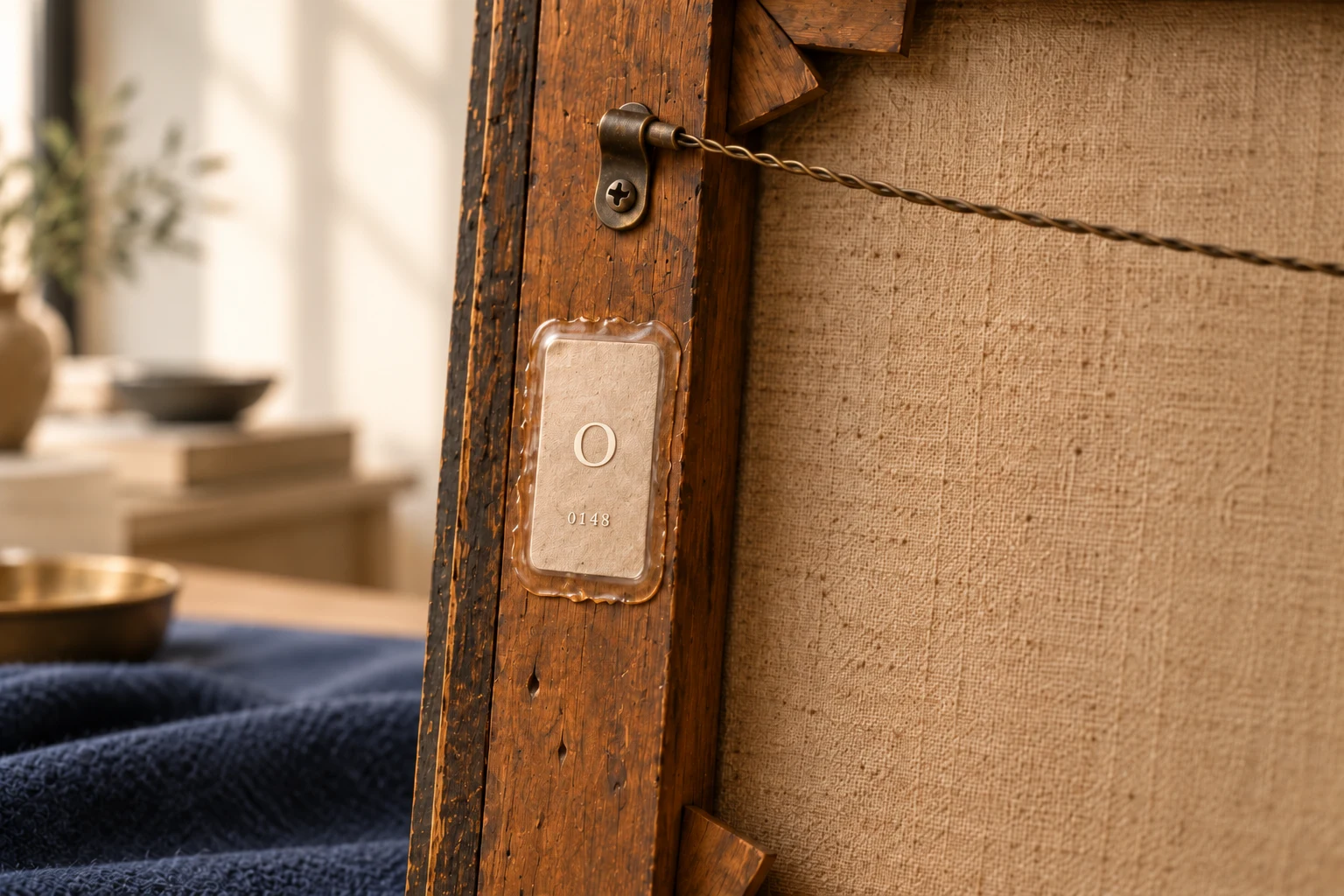
A physical tag connects people to the asset’s evidence and custody history.
Open the record
from the tag.
The tag opens the asset’s record, and each tap gives a one-time code that Outlast Us checks against it. Its printed face can be discreet or carry a miniature artwork.
The record brings its identifying details, photographs and documents together for the next person.
Check the match.
A basic check confirms that the tag and its record belong together and have not been changed. Checking the object itself, and how the tag is attached, needs separate evidence.
- Signed data
- Has the tag’s signed data been changed?
- Signing authority
- Can the signature, and the authority behind it, be checked against a key trusted on its own?
- Record match
- Do the tag’s credential and evidence match the record it opens?
Evidence that carries forward.
- Create the record
- Keep identifying details, photographs and documents together in one portable package.
- Pass it on
- The recipient reviews and accepts a custody handoff before control of the record moves.
- Keep its sources
- Published provenance keeps its author, time, category and stated basis for later review.
HOW IT RUNS
On the web, on a phone, and in your own systems.
The same records, reached four ways.
- On the websiteRegister works, add photos and files, invite people and manage transfers from any browser.Web
- In the phone appWrite tags and check them. Tags are written with a phone, and anyone can check one by tapping it.Phone
- Through an APIConnect a catalogue, inventory or service system. API access is set up with each customer.Set up with you
- With your other toolsMarketplace, retailer, grading and service integrations are scoped as projects.Scoped with you
See registration step by step in How it works.